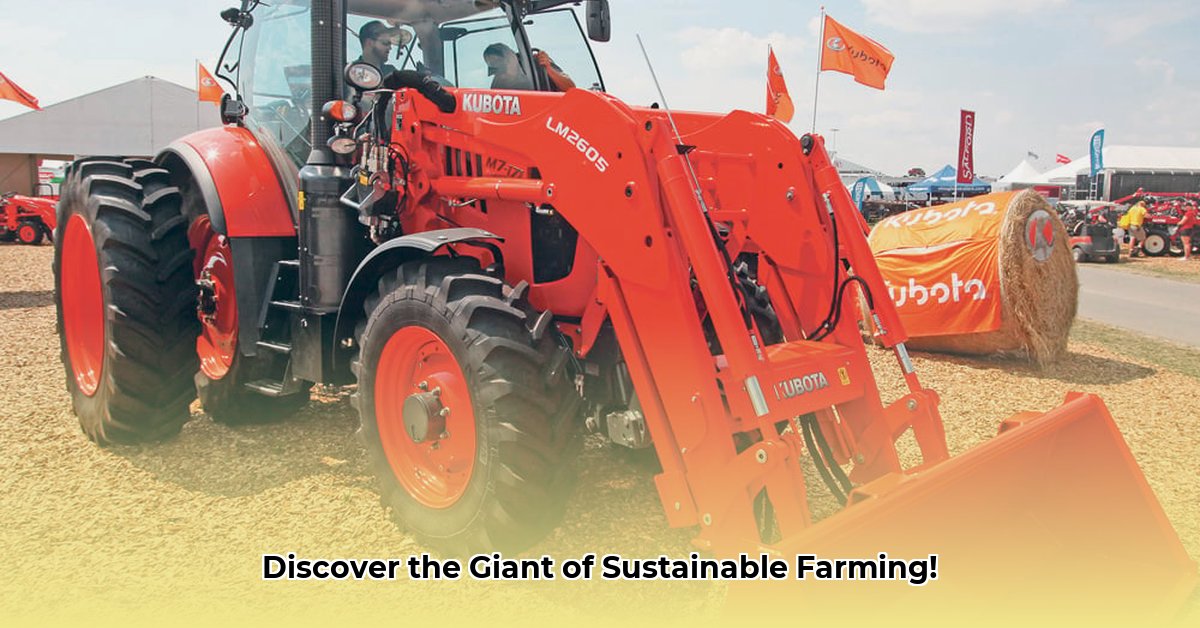
The largest Kubota tractors, such as the M8 series, offer significant productivity boosts. However, their impact on sustainable farming practices is a complex issue deserving careful consideration. This article explores both the potential benefits and drawbacks, examining how these powerful machines can contribute to – or detract from – environmentally responsible agriculture. For more on optimizing Kubota operation, check out this guide on tractor seat upgrades.
The Power and the Promise: Efficiency vs. Environmental Impact
High-horsepower tractors like the Kubota M8 significantly increase farm efficiency. Their capacity for rapid plowing, planting, and harvesting translates to covering more acreage in less time, potentially leading to higher yields and reduced labor costs per unit of production. This efficiency gain can be substantial, particularly on large-scale operations. But this efficiency comes at a cost. Larger tractors generally consume more fuel, leading to increased greenhouse gas emissions and a larger carbon footprint. Furthermore, their weight can compact soil, negatively impacting water infiltration, aeration, and overall soil health. The central question, therefore, becomes: how can we harness the productivity of these machines while minimizing their environmental impact?
Fuel Consumption and Greenhouse Gas Emissions: A Critical Consideration
Fuel efficiency is a paramount concern when evaluating the sustainability of large tractors. Greater fuel consumption directly translates to higher greenhouse gas emissions, contributing to climate change. While the overall land usage per unit of yield might potentially be reduced by the efficiency gains of the Kubota M8, the increased fuel usage remains a significant environmental concern. Therefore, strategies for reducing fuel consumption, such as optimizing field operations and implementing precision agriculture techniques, are crucial for responsible large-tractor use. Data suggests that fuel consumption increases linearly with horsepower, although the exact relationship varies depending on factors like terrain, soil type and operation type. This underscores the need for careful planning and utilization of large machinery.
Soil Health and Compaction: Minimizing Negative Impacts
Heavy machinery has a significant effect on soil health. The weight of large tractors can compact soil, reducing its porosity and negatively affecting water infiltration, aeration, and root growth. This compaction can decrease yields in the short term and cause long-term damage to soil structure and fertility. The impact is particularly acute in sensitive soil types. However, the use of precision agriculture techniques can mitigate this risk by allowing for targeted inputs and minimizing unnecessary passes across the field.
Precision Agriculture: Technology's Role in Sustainable Practices
The rise of precision agriculture offers valuable tools to minimize the negative environmental impacts of large tractors. GPS-guided tractors, variable-rate technology (optimizing fertilizer and pesticide application based on real-time field data), and other advanced systems allow for more targeted and efficient farming. These technologies enable farmers to reduce fuel consumption, minimize soil disturbance, and optimize input use, thereby contributing to more sustainable agricultural practices. Studies have demonstrated substantial reductions in resource use through the implementation of such technologies; for example, variable-rate fertilizer applications can reduce fertilizer use by up to 25% while maintaining or even improving crop yields.
Balancing Efficiency and Sustainability: A Practical Approach
The optimal tractor size varies significantly based on farm size, crop type, and farming practices. While large tractors like the Kubota M8 are highly effective for large-scale monoculture operations, they may be unsuitable for smaller, diversified farms. Choosing the right equipment for the specific needs of a farm is critical for both economic and environmental efficiency. For many smaller farming operations, the high initial and operational costs associated with a Kubota M8 would outweigh its efficiencies.
Key Takeaways:
- Efficiency Gains: Large tractors like the Kubota M8 increase farming efficiency, leading to potentially higher yields and reduced labor costs.
- Environmental Costs: Increased fuel consumption and potential soil compaction are significant environmental downsides.
- Technological Solutions: Precision agriculture greatly mitigates the negative impacts of large machinery.
- Contextual Considerations: Tractor size and suitability depend heavily on farm scale, crop type, and farming practices.
- Integrated Approach: Sustainable management practices combined with advanced technologies are essential for responsible large tractor use.
This holistic approach, combining technological advancements with thoughtful management strategies, is crucial for realizing the potential of large tractors within a framework of sustainable agriculture. The future of sustainable farming likely involves integrating these powerful machines responsibly, complemented by ongoing innovations in fuel efficiency and precision agriculture.